
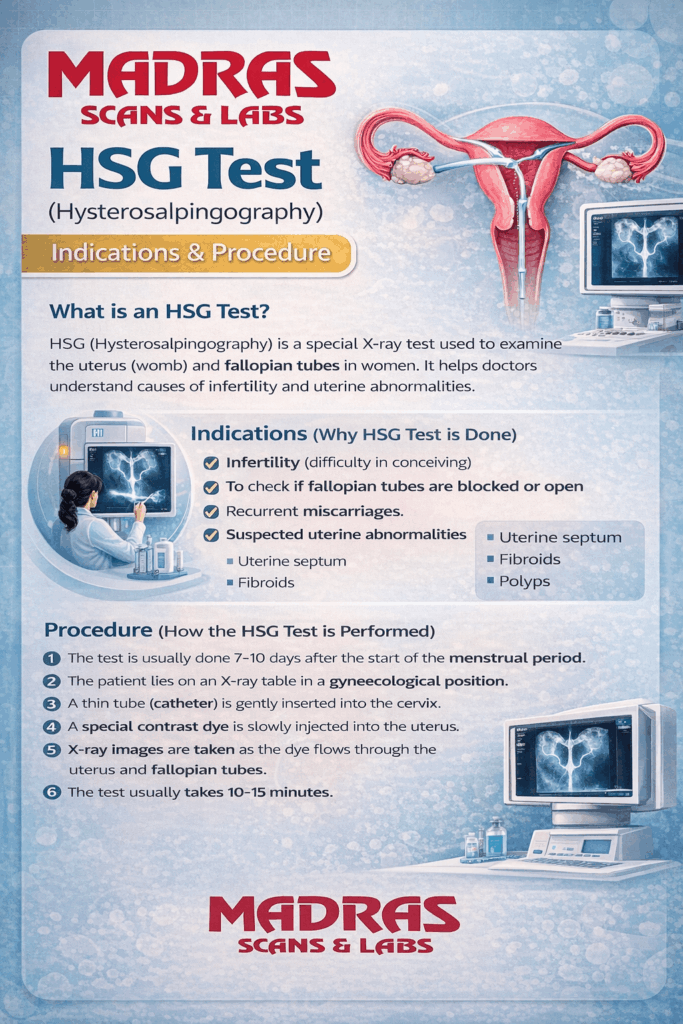
HSG Test (Hysterosalpingography)
Indications & Procedure
What is an HSG Test?
HSG (Hysterosalpingography) is a special X-ray test used to examine the uterus (womb) and fallopian tubes in women. It helps doctors understand causes of infertility and uterine abnormalities.
Indications (Why HSG Test is Done)
HSG is advised in women with:
-
Infertility (difficulty in conceiving)
-
To check if fallopian tubes are blocked or open
-
Recurrent miscarriages
-
Suspected uterine abnormalities
-
Uterine septum
-
Fibroids
-
Polyps
-
-
After tubal surgery or sterilization reversal
-
To evaluate the shape and size of the uterus
Procedure (How the HSG Test is Performed)
-
The test is usually done 7–10 days after the start of the menstrual period.
-
The patient lies on an X-ray table in a gynecological position.
-
A thin tube (catheter) is gently inserted into the cervix.
-
A special contrast dye is slowly injected into the uterus.
-
X-ray images are taken as the dye flows through the uterus and fallopian tubes.
-
The test usually takes 10–15 minutes.
-
Mild discomfort or cramping may be felt during the procedure.
After the Test
-
Mild cramps or spotting may occur for a few hours.
-
Normal activities can be resumed the same day.
-
Report severe pain, fever, or heavy bleeding to your doctor.
Benefits of HSG Test
-
Quick and effective test for infertility evaluation
-
Helps plan further fertility treatment
-
Can sometimes open minor tubal blocks