
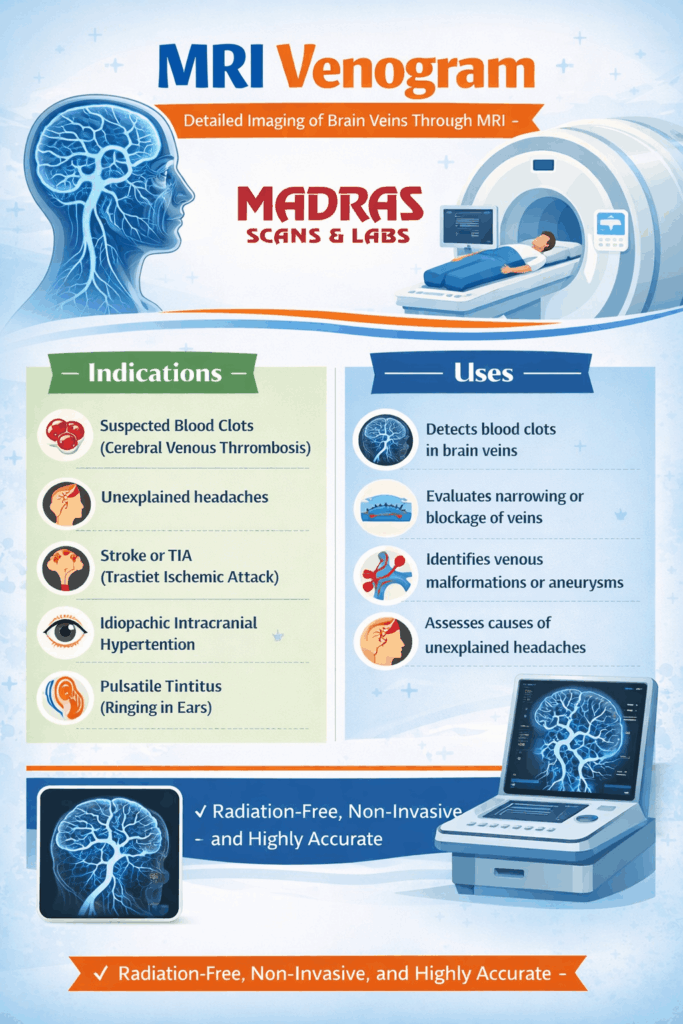
What is MRI Venogram?
MRI Venogram (MRV) is a non-invasive MRI technique used to visualize the veins and venous blood flow in different parts of the body, most commonly the brain. It helps detect abnormalities in veins without using X-ray radiation.
MRV provides detailed images of venous structures and is especially useful in diagnosing conditions affecting blood drainage.
Indications of MRI Venogram
MRI Venogram is advised in the following conditions:
Severe or persistent headache
Suspected cerebral venous thrombosis (CVT)
Unexplained brain swelling
Stroke symptoms in young patients
Visual disturbances
Raised intracranial pressure
Seizures with unclear cause
Evaluation of venous malformations
Monitoring known venous disorders
Uses of MRI Venogram
MRI Venogram helps to:
Detect blood clots in brain veins
Identify blocked or narrowed veins
Diagnose venous sinus thrombosis
Assess abnormal venous drainage
Differentiate between arterial and venous stroke
Plan treatment for neurological conditions
Monitor response to treatment in venous diseases
Advantages of MRI Venogram
No radiation exposure
Non-invasive and painless
High-resolution images of veins
Can be done with or without contrast
Safe for repeated follow-ups
Conclusion
MRI Venogram is a safe, accurate, and advanced imaging test that plays a crucial role in diagnosing venous disorders, especially of the brain. Early detection through MRV helps in timely treatment and better patient outcomes.